
Christmas Traditions With Kids: 5 Simple Ideas
Share
Every December, once the school concerts are done and the rush of the end of the year stops, I find the same questions tugging at me:
Which traditions are ours?
Which ones did we inherit without thinking?
And which ones do we want our children to look back on and say,
“We always did that”?
Christmas has a way of flushing all of that to the surface. The calendar fills, the to-do list stretches, and somewhere in the middle we try to quietly weave meaning into it all.
Not the cinematic, snow-globed kind of meaning.
The ordinary, repeatable, “this is just what we do” kind.
That’s really what tradition is:
a small thing, done the same way, at the same time, wrapped in a story.
What I love is that many of the most beautiful traditions don’t need much from us at all. A candle. A bowl. A scrap of greenery. Five minutes under the evening sky. Each one however, has one thing in common - being together with loved ones.
Below are five simple Christmas ideas to do with kids, each one borrowed from older customs and rewritten for current times. Ideas that maybe one day may form a tradition for your little ones.
How Traditions Begin (For Real)
No child has ever become sentimental on command because a parent said,
“Attention everyone, this is our new family ritual.”
Instead, traditions tend to grow from three quiet ingredients:
-
Repetition
The same thing, at roughly the same time, every year.
“We do this on Christmas Eve.”
“We do this the first weekend of December.” -
The senses
A particular song.
The smell of something in the oven (for me it has to be my mother's ham)
The way the lights are dimmer than usual. -
A story
“In Iceland, families have a Christmas Book Flood, so we join them in our own way.”
“When I was younger we used to light a candle together on Christmas eve for loved ones that couldn't be with us.”
If you keep those three in mind, almost any small act can become something your children carry with them.
Here are five such “small acts” to borrow.
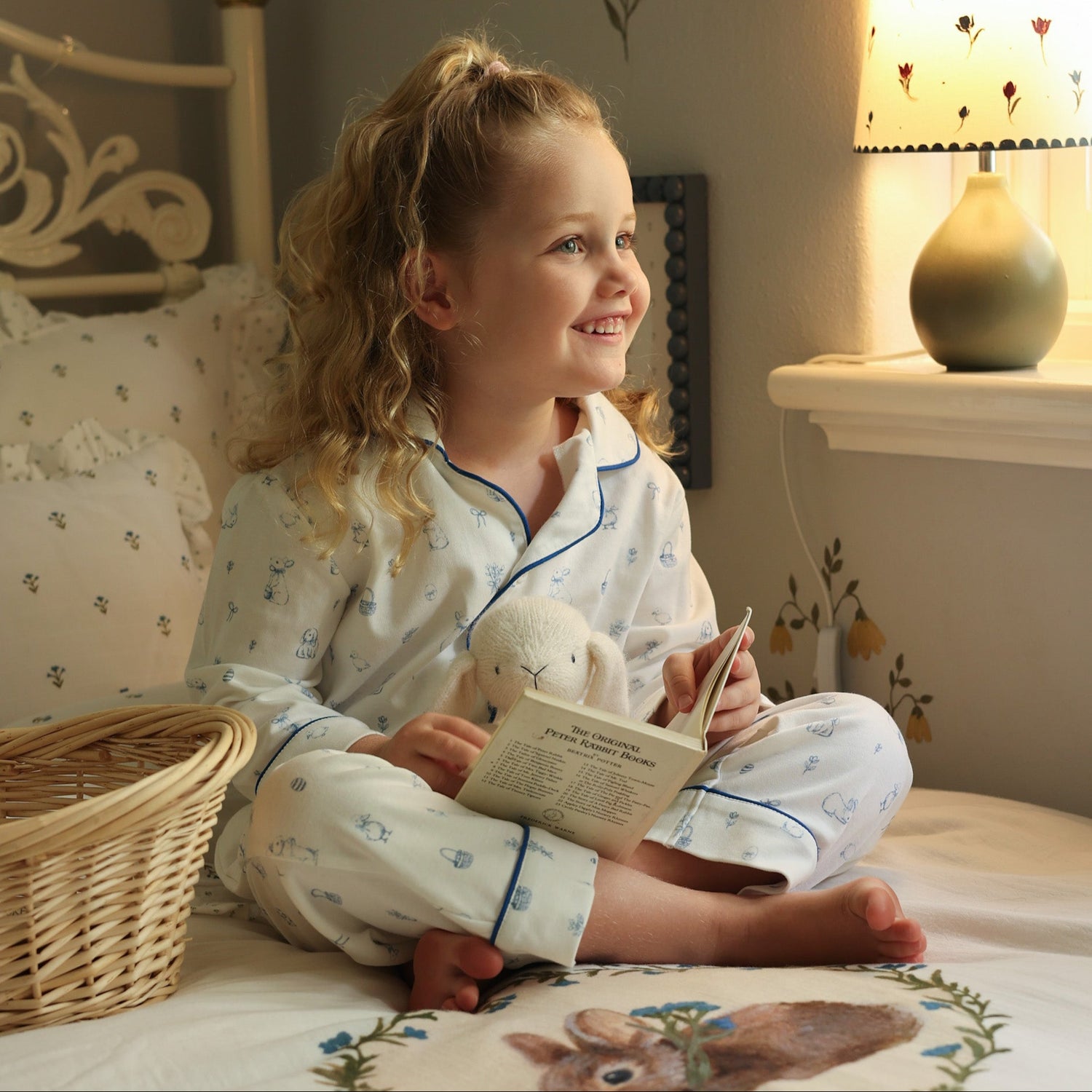
1. The Christmas Book Flood Night
For the child who always wants one more story
In Iceland, there’s a tradition with a name that feels like it belongs in a children’s novel: Jólabókaflóð, the Christmas Book Flood. Families give each other books, then sink into an evening of reading with something warm to drink.
How it might look in your house
Pick one night in December and give it a name your kids will recognise next year:
Book Flood Night.
Beforehand
- Take a trip to the library and build a “Christmas basket” of books. Some Christmas stories, some not. Just stories you want inside your December.
On the night
- Everyone changes into pyjamas after dinner.
- Pillows and blankets migrate to the lounge room floor.
- The big light goes off; a lamp, fairy lights or a single candle comes on.
- Grown-ups read aloud until their voices are warm and frayed.
- Older kids “read” picture books to younger siblings or to a lineup of stuffed animals.
- In their hands
- Warm milk, hot chocolate, or water in the “special cups” that belong to December.
The books themselves will change every year. The shape of the night won’t. That’s what your children will remember: the annual moment when the house grows quieter and stories come alive.
2. Stir Up Sunday Wishes
In parts of the UK, the Sunday before Advent was once called Stir Up Sunday. Families would gather to make the Christmas pudding, each person taking a turn to stir and making a wish for the year ahead.
Most of us aren’t boiling dense puddings anymore, and certainly not in the heat of an Australian December, but the core of it is too lovely to lose:
everyone’s hands in the bowl, everyone’s hopes in the air.
Your bowl of wishes
Choose a weekend in late November or early December and quietly crown it “our stirring day.”
Pick something simple you’ll actually make:
- Muffins
- Pancakes
- Brownies from a box
- Muesli bars held together with honey
Place the bowl in the centre of the table.
- One by one, each person takes the spoon and gives the mixture a good stir.
- While they stir, they say one wish for the coming year out loud.
For small children it might be,
“I wish for more beach days,” or
“I wish my cousin can visit.”
The ingredients will change; the act of gathering with one bowl in the middle of the table will not. That’s the part that becomes tradition.
3. The Extra Place At The Table
For kindness and to remember those who cant be with you.
In Polish homes on Christmas Eve, the table is often laid with one extra place: a full setting for a guest who might never arrive. It’s a symbol of hospitality, of remembrance, of staying open.
Your “someone else” setting
When you lay the table for your main Christmas meal, set one more place than you need:
- An extra plate
- An extra cup
- An extra set of cutlery
- An extra chair
And then explain to your little ones:
- “This is for anyone who might be lonely this Christmas.”
- Or, “This is for someone we love who can’t be here.”
- Or simply, “This reminds us our table can always stretch.”
Some years, that chair will stay empty and purely symbolic.
Some years, you might quietly fill it with a neighbour, a grandparent, a friend on their own.
Your children will grow up believing that a table looks more complete with space for one more.
4. The Little Hanging Tree
For the magic that lives just above eye level
Long before full-sized Christmas trees moved into living rooms, some families in Central Europe hung a small branch or the top of a tree from the ceiling above their table, decorated with fruit, nuts and paper ornaments.
It’s part charm, part blessing, part practical use of limited space.
And for kids, a tree floating in the air is instant enchantment.
Your upside-down greenery
Choose a day early in December and quietly declare it: Hanging Tree Day.
Find your “branch”:
- A small bough from the garden
- An embroidery hoop
- A coat hanger bent into a rough circle
Wrap it with what you have:
- Cuttings from a hedge or herb garden
- A length of tinsel or garland that’s seen better years
Lay out a small invitation to the kids:
- Paper stars
- Scissors and scrap paper for snowflakes
- Little rectangles where they can write wishes or draw tiny pictures
Let them decorate it as chaotically as they like. Then hang it over the table or in a doorway using strong string and removable hooks.
It doesn’t need to be pretty enough for the internet. It just needs to appear, roughly the same week each year, so that one day your children will be grown and say,
“My favourite thing was the funny little tree that hung above the table.”
5. First Star Watch
For the exact moment Christmas “begins”
In some Eastern European traditions, the main Christmas Eve meal only begins after someone spots the first star in the evening sky. It’s a nod to the star of the nativity story, yes, but it’s also a simple act of collective attention.
Your sky ritual
Choose Christmas Eve, or another evening that makes sense for small bedtimes.
- Step outside together just after sunset.
- Search the sky for the first star
- The “star” can be: An actual star, if the sky is generous or even a bright planet
- The first person to see it calls out, “I see the star!”
Whatever comes next in your family rhythm – dessert, one small gift, your favourite carol, the nativity story, a silly movie – begins from that moment.
Year after year, your children will learn that Christmas doesn’t truly start when the shops say it does. It starts when you all stop, step outside, and pay attention to the same small star overhead.
Letting Your Own Traditions Find You
December is always such a busy time, but with each Christmas we have the opportunity to form memories with our children they will always remember.
It can feel overwhelming, but maybe you start with a Book Flood Night and an extra place at the table. Maybe just the first star watch, whispered into existence this Christmas Eve.
If it feels good and do-able, repeat it next year. Tell the story again:
“In Iceland, families do this…”
“In Poland, they set an extra place…”
“In our family, we always…”
And slowly, you’ll look up one day and realise:
Your children have traditions now. Not because you chased them, but because you lived them, one small December at a time.